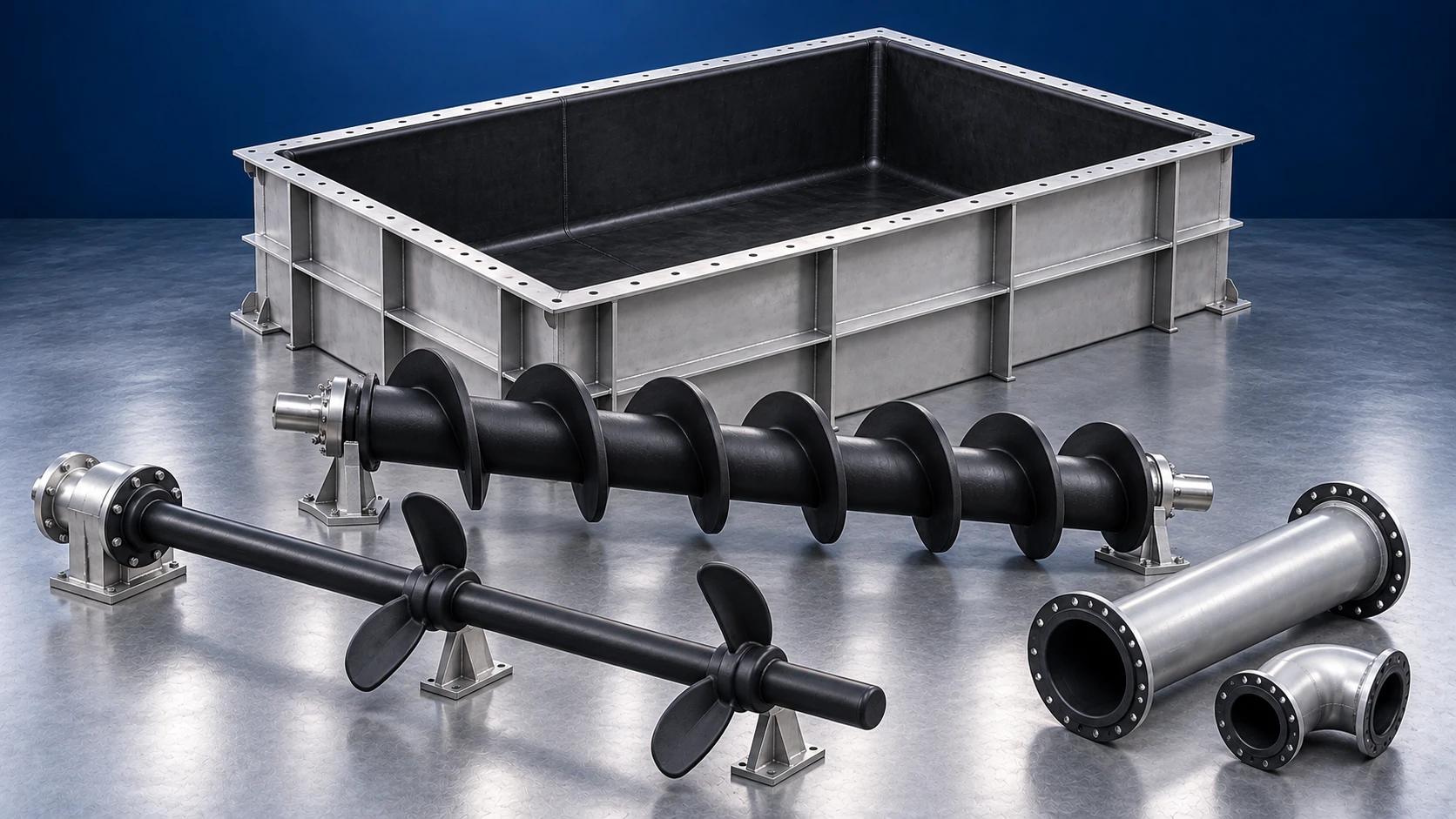
New linings and repairs with the required cure process.
CAPABILITIES
Rubber materials and applications
Rubber compounds
Natural rubber, chlorobutyl, nitrile, neoprene and specialty rubbers.
Common uses
Tank and vessel interiors.
Slurry-handling components and pipe spools.
What matters for your part
Process chemicals, concentration, temperature, abrasive solids and lining thickness.
Vulcanization & repair
Bonding and curing complete a new lining; repairs address damaged areas of an existing lining.
Work scope
New equipment lining.
Repair of existing lined surfaces.
What matters for your part
Existing lining condition, access, substrate preparation and the required cure process.
Shop & field work
Shop capacity up to 12 feet wide by 40 feet long; larger parts can be lined in the field.
Common uses
Industrial vessels and process equipment.
Installed tanks, vessels and agitators that cannot be transported to the shop.
What matters for your part
Overall dimensions, access, handling and inspection requirements.
QUOTE INFORMATION
What to include in your inquiry
Operating environment
Provide the process media, concentration, temperature and abrasive solids present. These details help establish the rubber compound and lining thickness.
New lining or repair
Identify the surfaces to be lined, existing lining condition and access for preparation and application. Shop work and field work require different planning.
Acceptance requirements
Confirm visual inspection, spark-test requirements and any documentation needed before release.
Common questions
Which rubber compounds can ACS apply?
Capabilities include natural rubber, chlorobutyl, nitrile, neoprene and specialty compounds. Chemical exposure, temperature, abrasion and the project specification guide compound selection.
Can a damaged rubber lining be repaired?
ACS reviews the existing compound, damage, access and cure requirements before proposing repair or replacement. For urgent lining damage, contact ACS to discuss assessment and scheduling.